Showing posts with label Photos. Show all posts

Saturday, April 19, 2014

Showing you're here on Earth

Isn't it amazing how our lives are changing?  Who would have thought that next Tuesday, thousands, or maybe millions of people could be taking a selfie and posting it online.

Will you?

NASA want to make a global selfie.  They are asking people to take a photo of themself, holding a printable sign or to mark their spot with rocks, drawing on the sand, or whatever.


http://www.nasa.gov/sites/default/files/files/GS_SIGN_English.jpg


Then, you upload the photo to facebook/flickr/instagram or twitter.

NASA will then create a global selfie portrait - a mosaic image and a video and share it in May.


It's a long way on from the first reported selfie:

http://www.mirror.co.uk/news/weird-news/first-ever-selfie-amazing-pic-3218544
Selfie has only just made its way into the dictionary but, as this picture taken in 1839 shows, people have been doing them for a long time.
In fact, this has been hailed as the first ever selfie.
Amateur chemist and photography enthusiast Robert Cornelius, from Philadelphia, took the self-portrait in his family's silver-plating shop in the city.
There was no remote shutter release on the primitive camera - a Daguerreotype invented by Frenchman Louis Daguerre - so Robert had to scamper in front of the equipment after removing the cover on the lens.
He wrote on the back of the photo: "The first light picture ever taken. 1839."
Considering that he was making history, he doesn't look all that chuffed - maybe it was because he had to stand still for up to 15 minutes for the portrait. Or maybe it was because he had an inkling that some celebs would one day make the selfie such a self-indulgent yawnfest.
Robert's picture is kept in the Library of Congress  in Washington DC.


http://www.mirror.co.uk/news/weird-news/first-ever-selfie-amazing-pic-3218544#ixzz2zJuZSkSg 


Thursday, February 13, 2014

Working on feelings and attitudes

One comment that is often expressed at Cambridge English seminars is that students find it hard to pick up on feelings and attitudes.

When I saw these pictures and the video they come from, I thought they would make great material for class and for working on feelings and attitudes.

First, show students the pictures (preferably one by one):
What's the matter with this man?  How is he feeling?


Who is the man in the light blue T-shirt?  What's the problem?What's the man in the jacket saying to him?
And this woman?  How does she feel?  What's she saying?  


Why has the man's expression changed?

Why is this man looking so happy?  What sign is he making?  Why?

Then, show them this video:


Students could 'become' one of the people who was parked.  They have just arrived home.  They are telling their family/friends about what happened to them today.....


Thursday, February 6, 2014

Which language is Arsene speaking? What's he saying?

In my previous post, I sang the praises of Arsene Wenger, coach at Arsenal Football Club.

When I was searching for a photograph of Arsene Wenger, I came across lots of very expressive photos of him.

It occurred to me that they would make a fun classroom activity!

Start by asking students if they recognise the man in the photos.  Tell students about this man.  His achievements:


He was born in a village near Strasbourg, France.

He can speak 3 languages (English, French and German) fluently.  He can also speak Spanish and Italian and a bit of Japanese.

When he was 29 years old, he did a 3-week English course in Cambridge.

He works in London.

He is the manager of an important football team there.

He has been manager at that club since 1996.
  • Honours: English Premier League: 2004, 2002, 1998; FA Cup: 2005, 2003, 2002, 1998; FA Community Shield: 2004, 2002, 1999, 1998; French Ligue 1: 1988; French Cup: 1991; Japanese Super Cup: 1996

The players at Arsenal now can speak 12 different languages.

Next, in pairs or small groups, students discuss what language they think Arsene Wenger is speaking or thinking in in each of the photos.  They imagine that there is a speech or thought bubble coming out of Wenger's mouth.  They draw a bubble for each picture and write what he is saying or thinking in each one.

https://encrypted-tbn1.gstatic.com/images?q=tbn:ANd9GcQT2x6pu1PM18ifo_ZYUvRCu5cfBG5UiDs8l5AUz-VqcKz2i2xf
clipartsfree.net


2 pairs or groups join to work together.  They take it in turn to show their thought or speech bubbles to the other pair/group.  They try and match each bubble to the picture it was written for.

http://www.herald.co.zw/arsene-wenger-purring-2/
http://i.telegraph.co.uk/multimedia/archive/00796/arsenewenger2708reu_796444c.jpg
http://www.theguardian.com/football/2009/jan/02/arsenal-arsene-wenger-transfer-window
http://i.telegraph.co.uk/multimedia/archive/02104/th_2104704b.jpg
http://www.inthestands.co.uk/news/arsenal-and-arsene-wenger-are-doomed-warns-emmanuel-petit.html/attachment/wengercry_415

Friday, January 10, 2014

You just can't keep a secret these days!!!

I came across an amusing story the other day.  It really brought home the power of social media and how difficult it is for anyone to do anything quietly, without anyone noticing.

Of course, the thing that was supposed to happen quietly was quite likely to not happen that way - I mean you can't really hide a box this big away!!!

https://twitter.com/jenayres/status/420246173522198528/photo/1/large
Another image of this same box was also shared on Imgur with the question:

What's the largest item you can have shipped from Amazon? Because I think my neighbor just got it.

 Readers of reddit and viewers of Imgur started speculating about what could be inside this box.

Very quickly, Ad Age media news got hold of the story and linked it to a campaign announced last September by Nissan and Amazon.  3 car buyers would have their brand new Nissan car delivered in an Amazon box.

Nissan then planned to release pictures and videos of the deliveries via social media next week - but the general public beat them to it by sharing the photos on social media themselves!

http://adage.com/article/the-media-guy/unboxing-photo-giant-amazon-package/290947/
I think this story will make great class material.  Show the picture of the box on the back of the lorry and get students to speculate what's in the box and where the truck is, who it's for, etc.
Then, show them the box with the car visible inside.  They discuss why a car was delivered like this.
Next, they can read the story of how the secret was revealed on social media and they could also discuss if this is a good or bad trend.

Language work could include work on wordbuilding and collocation.  Here is a screenshot of the word 'secret' from the English Profile vocabulary profile.

And here are the results of my search for 'secret' in the Cambridge dictionaries online:
I'll keep an eye out for the official launch of this campaign next week and share it with you.

Thursday, July 18, 2013

"Sometimes we need an excuse to do nothing"

Driving to Madrid in May, I took this photo.  (I must add that I wasn't driving the car!!!)


I shared the photo via Facebook and added a question:  Who will win the battle - the sun or the clouds?

After weeks and weeks of cold and rain (or was it months?), the sun has finally won the battle.  It's been glorious here for the past two weeks.

http://dictionary.cambridge.org/topics/weather-and-climate/clouds-dew-fog-and-steam/
Look at the above collection of words connected with clouds and weather.  As Gavin Pretor-Pinney says in his Ted talk 'Live with your head in the clouds',  clouds get a bad rap.

I have just watched his talk (you have to watch, otherwise you'll miss the fantastic pictures of clouds he shares).  Apart from learning a bit more about clouds and the way they form, I also approved of his suggestions:
“the exotic can be found in the everyday”

"step outside, pay attention"

"cloudspotting legitimises doing nothing"


"sometimes we need an excuse to do nothing"

For me, summer is the only time of the year when for an hour or two, I manage to do exactly that - nothing.....

That explains why I'm not writing blog posts as frequently as I should.....  My head is in the clouds.....

http://ittrainingtips.iu.edu/category/getting-started


Thursday, May 16, 2013

Inspiration from space

It's been a busy week.  Thursday already and I haven't written a post for this blog all week.  I haven't had much time to watch TV or see the news either, but one story I did stop and listen to was the version of Space Oddity by the Canadian astronaut Chris Hadfield.


I'd checked out Chris Hadfield's photos taken from space before.


On You Tube, there is another great video where Chris explains how he takes photos from space, what he likes taking photos of and why space is such a great place to take photos from.  There are also other videos that would be useful for classes about opening a can of soda in space, sleeping in space, cutting your toenails in space.....!!!

Chris and the rest of the crew are now back on earth.  Reading through their tweets as they travelled back down and landed makes fascinating reading.

That last tweet about smelling and feeling Spring caught my attention (maybe because the weather here has now returned to winter!) because training our students to use their 'senses' when describing photos and scenes is something I talked about recently in Santander, Malaga and Granada.

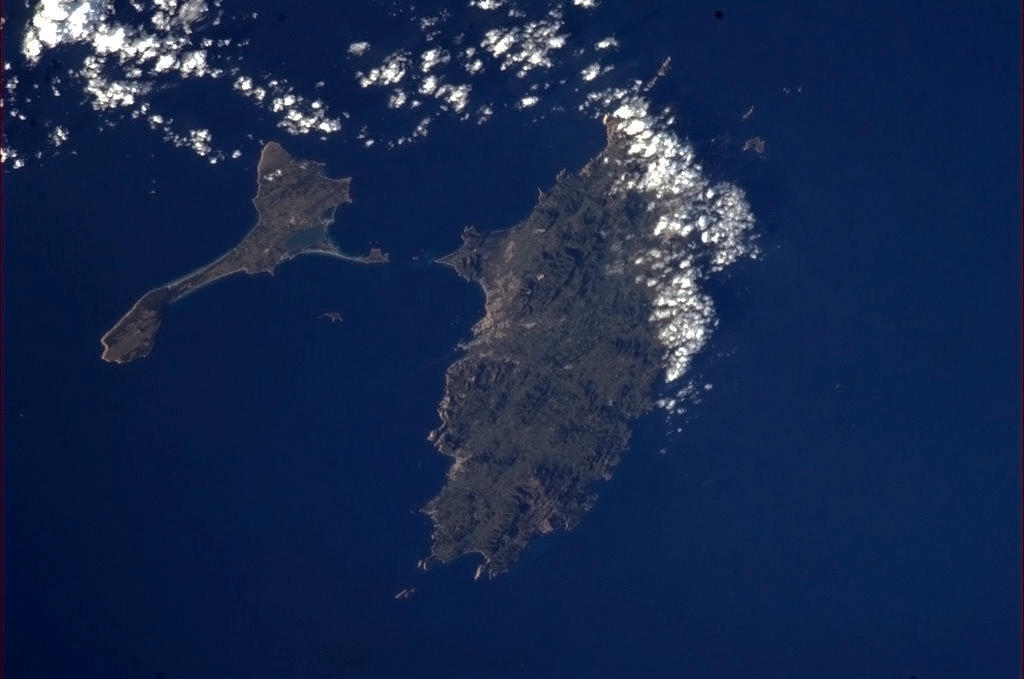
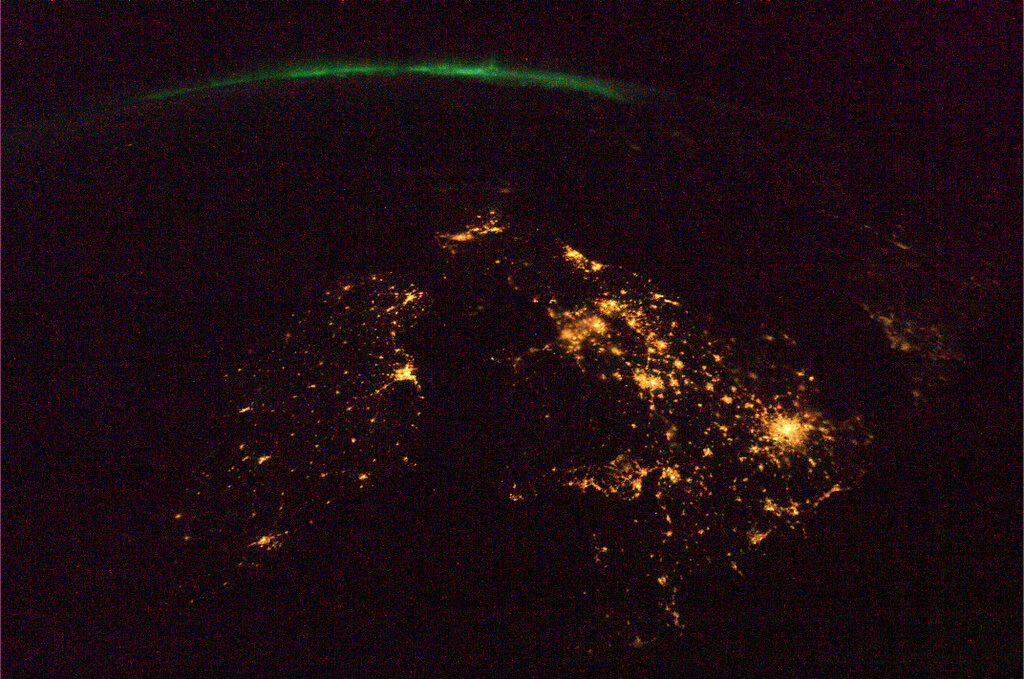
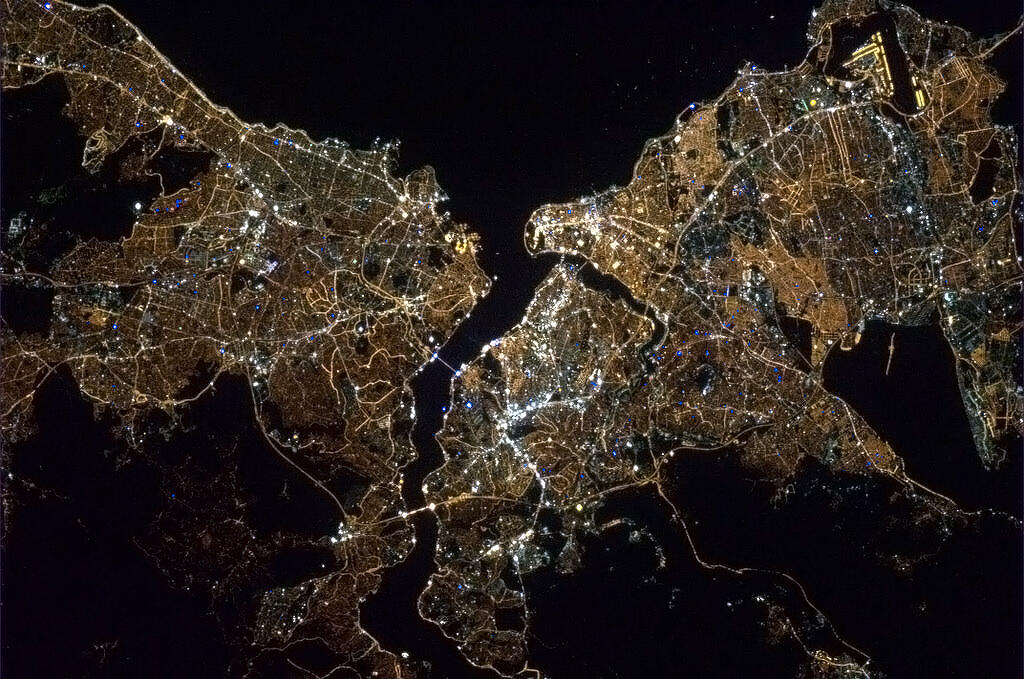
And finally, here are some photos that Chris Hadfield has shared via Twitter.  Can you guess which parts of the world they show?
1
2

3

Answers:  1  Ibiza    2  The UK and Ireland    3  Istanbul

Wednesday, April 17, 2013

Another great photo resource!

I was reading through some emails I'd received over the past few busy days in order to try and reduce the number of emails in my inbox.  (None of them urgent - I deal with those as they come in!)

While I was reading through one of the emails, I clicked on the link and read another of the tips submitted to the Cambridge English Language Assessment UK and Bell Teaching Ideas Competition.


The tip itself is a great one.  I've taken note and added it to my teaching resources.

And then, I tried out one of the suggested sources for photos for students to choose and compare.

I had never seen Tag Galaxy before.  I'll certainly be using it again (and again!)

Here is a description of how it works:

What it is: Tag Galaxy is a neat little tool that helps students to explore relationships between words and ideas as well as view pictures related to that word.  Type in a word to search and immediately you are transferred to a galaxy with the original word at the center and the associated ideas orbiting around it.  When you click on the word in the center, a globe populates with pictures from Flickr that are tagged with that word. Click on one of the orbiting words and tags related to that word start to orbit.  Tag Galaxy is a very neat way to view information!                    http://ilearntechnology.com/?p=3506

Here are two screenshots for the tag 'speaking'.  The first screenshot shows the original word 'speaking' with the related words around it.


The second shot shows photos 1 - 235 from flickr tagged with 'speaking'.
You can click on any of the photos to see it closer up and then you can go the original photo on flickr.  If you want to see more photos, you can choose the next batch of matches, or spin the globe to see the other side of it.

I'll DEFINITELY be using this resource a lot.

Tuesday, March 19, 2013

Great, simple idea for Describing photos in Speaking Tests

I have just finished reading another post from the Cambridge English South East Europe Blog.

(I mentioned the tips for teaching YLE a couple of weeks ago here.)

I really liked a new tip for preparing the photo task for the Cambridge English: Preliminary exam.

Laura Casetti from Argentina submitted this tip. I thought it was great and well worth a mention on this blog.


Exam preparation idea for:
Cambridge English: Preliminary (PET), Speaking paper, Part 3
Summary:
1. Ask students to bring in a topic-related picture.
2. Divide the class into pairs and ask the students to swap pictures.
3. Ask the students to describe their partner’s picture.
4. Ask each student to describe their own picture to the class, and then explain how their partner described it.
5. Encourage the class to discuss further ideas.
Materials needed:
A picture or photo from home
Describing a personal photo
“I usually ask students to look for a picture at home, related to a given topic (usually the one we are dealing with in class), and bring it to the following class. This gives them the chance to choose a picture that, in a way, inspires them. The class works in pairs, exchanging their pictures, which, as I said before, have a topic connection.
Once they have done this, I give them a task for Part 4. After they have finished this, they are asked to tell the group how they would have described the picture they brought, and how their partner actually did this. Then, they can ask the rest of the group for further ideas.
This activity proves quite fruitful, since it allows students to open their minds to new ideas about what to say about a picture, enlarging the scope of possibilities. If this is done regularly when we finish dealing with a given topic, at the end of the course they will have a folder with their own pictures, which will be useful for revising the topics, prior to the oral interview.”

I would suggest that the same idea could be used with groups of Cambridge English: First, Advanced and Proficiency students.
With these groups, you could either ask them to bring in two related photos or they put their photos together and make pairs of photos and think of a question that could be asked in the style of the Cambridge English: First, Advanced or Proficiency photo tasks.


Thursday, March 7, 2013

Link to a great post on Take a Photo and...

I received an email on Monday from the Blog 'Take a Photo and'.  It talked about a new post on their blog by Paul Braddock.

I clicked on the link and read the post.


I was very impressed.  It's one of those things that you can go off and take into your classroom immediately (well, all right, you would have to prepare the photos in advance and check out the links, etc).

I have also made a note to myself to sign up to Lino and Popplet - two web tools used and recommended by Paul in his post.  My 'for later' bookmark list just grew again......


Tuesday, March 5, 2013

What if our students are colour blind?

I've just returned from a trip to Rome, where I gave a session called 'What's in an image?'

One of the points I was suggesting that we as teachers should consider is that we may well have colour blind students in our classes and a proportion of candidates taking a Cambridge English exam will no doubt be colour blind in some way.  Colour and pictures are an important part of the Cambridge English: Young Learners Tests.

I have discovered a very useful site called Vischeck.

You can upload a photo or picture and it shows you what the picture looks like to someone who is colourblind.

At the conference in Rome, I showed the teachers what a picture used in a former Starters speaking test would look like to a boy or girl who is colour blind.
They can still see that two girls are playing basketball, but the actual colours that the the ball or the blonde girl's hair are changes. If we are asking them questions like 'What colour is this girl's hair?' then their answer would not be the same as ours!

Original picture (Starters Practice Tests 6 page 53)
Deuteranope means that people have a red/green colour deficit 
Tritanope means that people have a blue/yellow colour deficit.

On the Vischeck site, you can also check what a webpage might look like to these people.

One advantage would be that students with red/green deficit would be that having a teacher who overuses a red pen would not have the same effect!  But I was just thinking that the traffic system which functions around red-amber-green just doesn't seem logical!!!!!

Apparently, 7% of US males and 0.4% of US females are colour blind in some way.  Presumably, this is also the proportion that will apply to the students in Spain where I live and work.  And very probably in your classrooms too.  Bear this in mind when you show them a picture and ask:  What  colour is this?'!!!!!


Thursday, February 14, 2013

Tips for learning languages for visual learners

As I mentioned last Friday, I will be speaking at the IH World Young Learners Conference in Rome on March 1st.  My session is called 'What's in an image?'
(I guess you know by now that I like using pictures and photos in class!)

Another of my interests is Multiple Intelligences.  I'm always looking for ways to make things memorable for students and am aware that music stimulates people and helps many of them learn and remember things.

Others will associate particular items with situations or when they learnt it or where.

I myself am brilliant at faces, hopeless with names.  I can probably tell you where I know a person from, when we last met, but don't ask me to introduce you!!

So, I clicked on a link to a Youtube video about Visual/Spatial learners.
It's a short clip about tips for learning a language with people who learn better when they associate language with images.
It contains some good ideas for recording and remembering language.

And I liked the final sentence:
'Remember - no matter what you decide to do, learning a language should be fun!  So be creative and enjoy learning about a new language and a new culture!'
Great advice!

Sunday, November 25, 2012

Travel inspiration

"We love exploring new places, taking photographs and staying at the most unique hotels we can find. "

I can relate to that!!

The above sentence is taken from the 'About' information on the Global Grasshopper.com website.


As I told you in my previous post, I will be in Italy Monday 26th November through to Friday 30 November.  It's going to be a packed trip and I was trying to work out which cities I might have a bit of time to explore (I'll not have much tourist time, unfortunately, but will probably be inspired to return to certain places as I whizz through them).


I hope to get a taste or snapshot of the five cities I'll be giving sessions in - Torino, Milan, Rome, Salerno, Reggio Calabria).

So when I ended up at the Global Grasshopper website after following a link I'd received in an email about eltblogs, I checked out the places mentioned in the article on '10 of the most beautiful places to visit in Italy'.  I'll be paying very short visits to Rome and Milan (2 of the places mentioned) and won't get to see the others on this trip.  I had a fantastic holiday in Sardinia this summer, so I fully support the mention of that island.


And I also took a quick look at the article and photos '10 of the most beautiful places to visit in Spain'.  I found myself nodding when I saw the 10 places that were covered.  Fantastic photos!!

I think the site, the organisation of the features (based around 10) and the photos have some fantastic material for use in class.  I'll certainly be using it for teaching and for personal reasons...  The hidden places in London might contain some great ideas for my upcoming trip to London ......

I'll try and find time to write posts when I'm in Italy.  If I don't post them while I'm there, I'm sure I'll be coming back with vast amounts of inspiration!   

Ciao!


Wednesday, November 14, 2012

pinterest - a great tool for classes!

Yesterday evening, I was teaching the vocabulary for containers and the things usually contained in each type.

It suddenly occurred to me that pinterest could be the perfect record (and teaching and revision) tool for vocabulary areas like this.

I have created a pinboard for this topic.  You can see it here:


Maybe we could start boards for the different levels of the Cambridge exams, especially for the topic areas that appear on the Cambridge English: Young Learners English Tests and the Cambridge English: Key and Cambridge English: Preliminary Tests??


Monday, November 12, 2012

Coping with cold weather

While I was checking my emails, I was listening to Sky News and in the review of the paper, they were discussing the impact of cold weather and snow.

Here in Cantabria, the temperature dropped by 10º(C) yesterday.  Brr!!!!  Many places both in Spain and the UK have had their first snow falls.


(There are some great photos of winter on the website I downloaded the above photo)

This reminded me of an article I had saved to share with you via this blog.  I came across it back in September and thought it would make great classroom material.

How does the chef at the British Antarctic Station feed 90 people when the nearest supermarket is 4,000 miles away?


http://www.dailymail.co.uk/home/moslive/article-2195789/British-Antarctic-Station-How-does-chef-feed-90-people-nearest-supermarket-4-000-miles-away.html

I suggest that you could start off by showing students the following subheading:

Antony Dubber works in one of the most remote, dangerous and beautiful places on Earth

Ask them to suggest where Antony works.  
Which remote places can they think of?  
Why might this place be dangerous and beautiful?  
What job does Antony do there?

Then, show them this photo and discuss whether they guessed this place:


Next, they could read the article and find out what makes the South Pole beautiful and dangerous, and why Antony's work as a chef there is challenging.

To follow up and focus on language, I thought students could look at the combinations of adjectives and nouns in the text.  (You could give them a list of adjectives used in the text and  they look for which nouns they describe).

For example:
a varied  (menu)
leading (centre)
fresh (fruit and vegetables) (herbs)
spectacular (night sky)
the nearest (supermarket)
the closest (supermarket)
the most popular (treats)
huge (freezers)

Well, I'd better wrap up because I have to pop out now!  Have a great teaching week!